You Won’t Believe What Dijon’s Food Scene Just Did to Me
Walking through Dijon’s cobbled streets, I wasn’t just tasting food—I was living history. The air hums with the sharp tang of mustard, buttery escargot sizzles in cozy bistros, and every pastry shop tells a story. This isn’t just a meal; it’s a sensory dive into Burgundy’s soul. If you think Dijon is only about mustard, trust me—you’re missing half the magic. The city unfolds like a well-seasoned recipe: layers of tradition, warmth, and authenticity simmered over centuries. For travelers seeking not just sightseeing but soul-nourishing connection, Dijon offers an invitation to slow down, listen closely, and taste deeply.
Arrival in Dijon: First Bites, First Impressions
Stepping off the train at Gare de Dijon-Ville, the first thing that greets visitors isn’t a monument or a skyline—it’s flavor. Within minutes of exiting the station, the scent of freshly baked bread and roasting chestnuts drifts through the autumn air, pulling you toward the city’s vibrant heart. Just a short walk away lies Place du Marché, home to one of France’s most celebrated open-air markets. Here, under elegant iron canopies that echo the 19th century, dozens of stalls overflow with seasonal abundance. Crimson radishes stand in neat rows beside mounds of golden chanterelles. Vendors call out greetings in warm, melodic tones as shoppers inspect wheels of creamy Époisses cheese, its rind glowing like sunset.
For many, this market becomes their first real taste of Dijon—not in a restaurant, but standing beside a wooden cart piled high with regional specialties. A vendor hands out samples of warm pain d’épices, the spiced honey cake that has been baked in Burgundy for generations. Its texture is tender yet resilient, carrying notes of cinnamon, clove, and orange zest. Nearby, baskets of fresh goat cheese rest on beds of grape leaves, each variety labeled with the name of a nearby village—Maligny, Gevrey-Chambertin, Nuits-Saint-Georges—connecting food directly to place. And of course, mustard appears everywhere: in jars, in sachets, rubbed into sausages, even blended into sauces drizzled over roasted vegetables.
This immediate immersion sets the tone for the entire visit. Unlike cities where tourism overshadows daily life, Dijon reveals its essence quickly and generously. There’s no waiting until dinner to understand what the region values—freshness, craftsmanship, seasonality. Even the act of buying bread feels meaningful. At Boulangerie du Palais, a line forms each morning for their sourdough levain, baked in a wood-fired oven using flour milled from local wheat. The crust crackles when tapped; the crumb holds moisture like a secret. To eat it with nothing more than a smear of butter and a slice of aged Comté is to begin a conversation with Burgundy itself.
Mustard Beyond the Jar: A Tasting Journey
No discussion of Dijon’s cuisine can avoid its most famous ambassador: Dijon mustard. But to reduce this complex condiment to a sandwich spread is to misunderstand its role in French culinary culture. In Dijon, mustard is not merely used—it’s revered. One of the best places to grasp this truth is at the historic Fallot Mustard Mill, a working factory located just outside the city center. Housed in a converted 19th-century mill along the Ouche River, the site combines industrial heritage with artisanal precision. Visitors walk along elevated platforms, looking down into stone mills where brown mustard seeds are slowly ground with verjuice—a tart juice made from unripe grapes—instead of vinegar, giving authentic Dijon its distinctive sharpness without bitterness.
The tour guides explain how traditional methods preserve flavor and texture in ways modern processing cannot replicate. Each batch takes days to prepare, allowing the ingredients to meld gradually. The result is a product far removed from mass-produced versions found in supermarkets. During the tasting session, guests sample varieties ranging from classic beige mustard to robust aged blends infused with Burgundy wine, honey, or even black truffle. The honey-infused version strikes a delicate balance—sweetness taming the heat, making it ideal for glazing ham or dressing roasted carrots. The wine-aged mustard, dark and aromatic, carries whispers of oak and berry, perfect for enriching stews or cutting through the richness of pâté.
But what truly distinguishes Dijon’s relationship with mustard is how deeply it’s woven into everyday cooking. Locals don’t just serve it alongside charcuterie; they use it as a foundational ingredient. It thickens sauces, marinates meats, and enhances vinaigrettes. At home-style kitchens across the city, cooks stir a spoonful into beef daubes or mix it into potato salads with crème fraîche. Some even blend it into cheese spreads or use it to baste poultry before roasting. This integration reflects a broader philosophy: ingredients are not meant to be showcased alone, but to elevate and harmonize with others. In Dijon, mustard isn’t a garnish—it’s a cornerstone.
Burgundy on a Plate: Escargot and Boeuf Bourguignon
If mustard represents Dijon’s boldness, then escargot and boeuf bourguignon embody its depth and warmth. These two dishes, iconic across France, reach a pinnacle of expression in Burgundy, where the quality of ingredients and patience of preparation turn them into culinary heirlooms. One memorable evening, I found myself seated in a softly lit bistro tucked behind the Palace of the Dukes. The room was nearly full, yet conversation remained hushed, reverent. When the escargot arrived—six shells nestled in a cast-iron dish, glistening with garlic-parsley butter—the aroma alone was enough to pause time.
Using the special fork and tongs provided, I extracted the first snail. Contrary to expectations, the texture was not rubbery or slimy, but tender, almost velvety, absorbing the rich herb-infused butter completely. Each bite carried the earthiness of the snail, elevated by the brightness of fresh parsley and the slow release of roasted garlic. It was indulgent, yes, but also refined—an elegant balance of simplicity and luxury. What surprised me most was how comforting it felt, like a warm embrace on a cool evening.
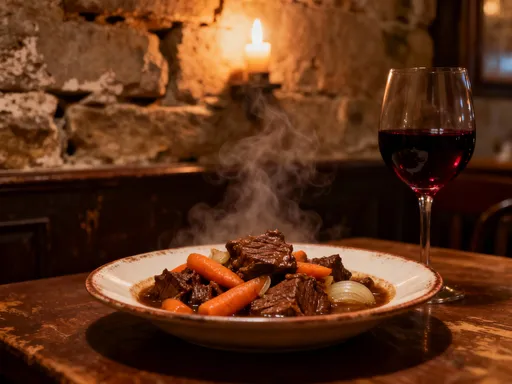
Later that week, I experienced boeuf bourguignon in a farmhouse kitchen just outside the city. Prepared by a local cook who had learned the recipe from her grandmother, the dish had simmered for over five hours in a deep Dutch oven. The beef, sourced from nearby Charolais cattle, had broken down into silky strands, absorbing the deep red hues of Pinot Noir from the Côte de Nuits. Pearl onions and button mushrooms, sautéed separately to preserve their integrity, added bursts of sweetness and earthiness. The sauce clung to the meat like memory, thickened naturally by gelatin released during the long braise, not by flour or cornstarch.
Paired with a glass of the same wine used in the cooking, the experience became transcendent. The acidity of the wine cut through the richness, cleansing the palate between bites. This is the magic of Burgundian pairings: they don’t compete—they complete. Such meals aren’t rushed. They unfold slowly, inviting presence and gratitude. To eat boeuf bourguignon in Dijon is not just to enjoy a stew; it is to participate in a ritual of care, patience, and regional pride.
Hidden Bistros: Where Locals Actually Eat
Tourist maps may highlight Michelin-starred restaurants, but the true heartbeat of Dijon’s food scene beats strongest in its unassuming neighborhood bistros. These are the places with no English menus, no online reservations, and often no website at all. Instead, they rely on word-of-mouth, loyalty, and the kind of hospitality that feels like being welcomed into a family kitchen. One such gem is a small, family-run establishment near the Musée Magnin, where the owner greets regulars by name and the daily menu is scrawled on a chalkboard in looping cursive.
Entering such a space feels different. The lighting is softer, the tables closer together, the music low—a mix of French chanson and jazz from the 1960s. The service is unhurried, attentive without being intrusive. When I asked the waiter for a recommendation, he didn’t recite a list—he asked what I liked, then nodded thoughtfully before suggesting the coq au vin, made with free-range chicken braised in red wine with lardons and thyme. When the dish arrived, it was served in the same earthenware pot it was cooked in, the lid lifted tableside to release a cloud of fragrant steam.
What makes these hidden bistros special isn’t just the food—it’s the philosophy behind it. Ingredients are hyper-seasonal. In spring, morels and fiddlehead ferns appear. In autumn, dishes feature game meats and chestnuts. The chef often shops at Les Halles Market each morning, selecting what’s freshest. Portions are generous but not excessive, reflecting a culture that values satisfaction over spectacle. And prices remain reasonable, a reminder that good food doesn’t have to be expensive to be exceptional.
For visitors, finding these spots requires a bit of courage and curiosity. Look for places filled with older couples, families, or groups of friends laughing over carafes of house wine. Notice whether the menu changes frequently. Avoid restaurants with multilingual signage or aggressive touts outside. A genuine local bistro won’t need to advertise loudly—it will already be full.
Sweet Escapades: From Crème de Cassis to Chouquettes
No exploration of Dijon would be complete without indulging in its sweeter traditions. While the city is known for savory excellence, its confections and liqueurs offer a different kind of delight—one rooted in heritage and craftsmanship. Start with crème de cassis, the dark, syrupy blackcurrant liqueur that originated in Burgundy. A visit to a traditional liquoriste, such as Le Comptoir des Spirits or a small boutique near the Cathedral of Saint-Bénigne, allows for tasting flights served in delicate glasses. The best versions are made from hand-harvested cassis berries, macerated in alcohol and sweetened with natural cane sugar. The flavor is intensely fruity, with a slight tartness balancing the sweetness.
Most famously, crème de cassis is the key ingredient in the Kir, a refreshing aperitif made by floating a small amount over chilled white wine, typically Aligoté from Burgundy. The combination creates a drink that is both elegant and approachable, perfect before a meal. In Dijon, it’s common to see locals enjoying a Kir on café terraces in the late afternoon, often accompanied by a small plate of nuts or olives.
Then there are the pastries—light, crisp, and deeply satisfying. Patisseries throughout the city display golden chouquettes, delicate puff pastry balls sprinkled with pearl sugar that crackles when bitten. They’re airy and slightly sweet, ideal with coffee. Even more unique are the macarons de Dijon, often confused with their Parisian cousins but entirely distinct. These are not meringue-based sandwich cookies, but rather oblong, almond-flavored biscuits with a firm exterior and soft interior, traditionally dusted with powdered sugar. Their origins trace back to the 1800s, when nuns in a Dijon convent began baking them as a way to use surplus egg whites.
At Maison Mulot, one of the oldest pastry shops in the city, these macarons are still made by hand using the same recipe for over a century. The scent of toasted almonds fills the shop, drawing in both tourists and lifelong residents. To eat one is to taste continuity—a small, edible link to the past. Whether enjoyed with tea or tucked into a pocket for a midday treat, Dijon’s sweets offer comfort and celebration in equal measure.
Markets and Food Tours: Immersive Culinary Discovery
For those seeking to go beyond dining and truly understand Dijon’s food culture, few experiences compare to a morning spent at Les Halles Market, especially when guided by a knowledgeable local. Officially known as Le Marché de Boucle, this historic market occupies a stunning iron-and-glass pavilion designed in the 1880s by Gustave Eiffel’s firm—yes, the same engineering mind behind the Eiffel Tower. Inside, the atmosphere is electric: vendors arrange pyramids of heirloom tomatoes, baskets of plump mirabelles, and trays of oysters fresh from Normandy. Butchers display cuts of Charolais beef with pride, while cheesemongers offer tastes of everything from creamy Saint-Florentin to pungent Langres.
Joining a guided food tour transforms a simple stroll into a masterclass in regional cuisine. Knowledgeable guides—often chefs or food historians—explain the significance of terroir, the concept that soil, climate, and tradition shape the flavor of food. They introduce you to producers, share stories behind specialties, and demonstrate how to select the best ingredients. I learned, for instance, that the best Comté cheese comes from wheels aged at least 18 months, developing nutty, caramelized notes. I discovered that morel mushrooms should be firm and hollow inside, not soft or damp.
These tours also open doors to experiences that might otherwise go unnoticed. A stop at a small olive oil and vinegar bar allows for sampling infused oils—rosemary, lemon, chili—perfect for dressings. A visit to a charcuterie stand reveals the art of pâté de campagne, a coarse country pâté made with pork, liver, and spices, best served at room temperature with cornichons. And everywhere, there’s encouragement to taste, ask questions, and engage.
For travelers, especially those unfamiliar with French markets, this kind of guidance builds confidence. It demystifies the process of shopping like a local, making it easier to return to a stall independently or attempt a recipe at home. More than that, it fosters connection—to people, to place, to the rhythms of daily life in Dijon. A food tour is not just about eating; it’s about belonging, even if only for a morning.
Why Dijon’s Food Stays With You
Long after the suitcase is unpacked and the photos uploaded, something lingers from a trip to Dijon—the memory of flavor. Not just the taste of a perfect bite, but the feeling it evokes: warmth, comfort, authenticity. This staying power comes from more than excellent ingredients or skilled cooking. It arises from the way food in Dijon is inseparable from place, from history, from a way of life that values slowness, care, and connection.
Every meal tells a story. The mustard recalls centuries of trade and innovation. The boeuf bourguignon speaks of winters spent tending the fire and waiting for flavors to deepen. The macarons de Dijon carry whispers of convent kitchens and generations of bakers preserving tradition. Even a simple baguette reflects a commitment to craft that resists industrialization. In Dijon, food is not a commodity—it is culture made edible.
For travelers, especially those in the 30 to 55 age range who value meaningful experiences over checklist tourism, this depth is profoundly moving. It invites a different kind of travel—one that prioritizes presence over pace, quality over quantity. You don’t need to visit every monument or check off every landmark. You simply need to sit at a corner bistro, order the daily special, and let the food guide you.
So if you’re planning your next journey, consider Dijon not just as a destination, but as a teacher. Let it show you how to savor, how to connect, how to find joy in the everyday. Because once you’ve tasted life the Burgundian way, you don’t forget it. You carry it with you—in your palate, in your memories, in the quiet hope of returning one day to taste it all again.