Unseen Korea: The Secret Natural Wonders of Gyeongju You’ve Never Heard Of
Gyeongju, often celebrated for its ancient temples and royal tombs, holds a quieter, wilder beauty beneath the surface. Far from the crowds, hidden valleys, serene forests, and untouched coastlines whisper stories of nature’s grace. I stumbled upon these places by chance—and each felt like a private revelation. This is not the Gyeongju on postcards. This is the real, breathing landscape most travelers miss. While visitors flock to Bulguksa Temple and the Tumuli Park, few venture beyond the well-trodden paths where silence reigns and moss grows undisturbed. These natural sanctuaries, cradled by time and tradition, offer not just scenic relief but a deeper connection to Korea’s soul. Here, history does not stand apart from nature—it lives within it.
Beyond the Temples – Discovering Gyeongju’s Hidden Natural Soul
Gyeongju is widely known as the capital of the ancient Silla Kingdom, a place where history is etched into stone pagodas, crowned burial mounds, and weathered inscriptions. Every year, thousands come to walk through its archaeological parks and admire its UNESCO World Heritage sites. Yet, beyond the curated trails and museum exhibits lies a different kind of heritage—one written not by human hands but shaped by wind, water, and time. This is the Gyeongju that breathes, where forest shadows shift with the seasons and mountain streams murmur secrets older than memory. The city’s true magic lies in this duality: a seamless blend of cultural reverence and natural harmony.
What makes this hidden side of Gyeongju so compelling is not just its beauty but its accessibility. These natural wonders are not remote or difficult to reach; they exist quietly alongside the very landmarks that draw tourists. A short detour from the main road, a gentle climb up a side trail, or a quiet turn down a village lane can lead to places where you may not see another soul for hours. For the mindful traveler—particularly those seeking peace, reflection, and a slower pace of discovery—these spaces offer something rare in modern tourism: authenticity without performance, beauty without spectacle.
Understanding Gyeongju fully means embracing both its monuments and its meadows, its artifacts and its air. The ancient Silla people did not separate themselves from nature—they lived in alignment with it. Their tombs were placed according to mountain lines, their temples oriented to catch morning light, their gardens designed to mirror the wild hills beyond. Today, visitors who take the time to wander off the main paths can still feel that same sense of balance. This journey is not about rejecting the historical sites but expanding one’s appreciation to include the living landscape that has cradled them for over a thousand years.
The Forgotten Forests: Walking Through Gyeongju’s Quiet Woodlands
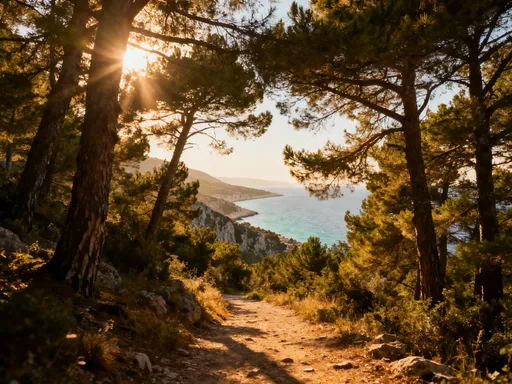
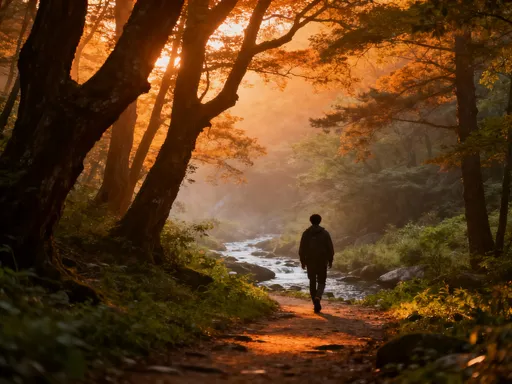
One of the most profound experiences in Gyeongju is walking through its lesser-known woodlands, where towering pines, ancient zelkova trees, and dense underbrush create a world apart. While Namsan Mountain is recognized as a cultural treasure, much of its forested slopes remain lightly visited, especially beyond the marked shrines and carvings. Trails here wind through dappled light, with roots curling over rocks and ferns unfurling in the shade. The air carries the scent of damp earth and pine resin, and the only sounds are the rustle of leaves and the distant call of a thrush or kingfisher.
Spring transforms these forests into a soft haze of pink and white as wild cherry blossoms bloom along stream banks and hilltop clearings. Unlike the manicured groves near Bulguksa, these blooms grow naturally, their petals drifting down like snow in the morning breeze. By autumn, the landscape shifts again—ginkgo trees ignite in golden flames, their fan-shaped leaves carpeting the forest floor in a crisp, fragrant layer. These seasonal rhythms are not staged for visitors; they unfold quietly, witnessed only by those who come at the right time and with the right intention.
One such trail, beginning near the village of Seocheon, leads into a secluded valley where few tourists venture. The path is well-maintained but unmarked on most tourist maps, accessible by a local bus or a thirty-minute bike ride from central Gyeongju. It climbs gently through a mixed forest of oak and maple, eventually opening onto a ridge with panoramic views of the surrounding countryside. Benches placed at intervals invite rest, but more often than not, you’ll find yourself alone, listening to the wind move through the treetops.
For travelers, especially those in their 30s to 50s seeking a reflective and rejuvenating experience, these forests offer a rare form of solitude. There’s no need for strenuous hiking gear—comfortable walking shoes and a light jacket are sufficient for most trails. Early morning is the ideal time to visit, when mist still clings to the valley and birdsong fills the air. It’s also when the light is most beautiful, filtering through the canopy in long, golden beams. These woodlands are not just scenic escapes—they are spaces for quiet contemplation, where the rhythm of walking becomes a kind of meditation.
Valley Secrets: The Hidden Streams and Waterfalls of Gyeongju
Deep within Gyeongju’s rural outskirts, tucked between low hills and rice paddies, lie hidden streams and seasonal waterfalls that few travelers ever see. These are not grand cascades, but modest, intimate flows—clear water tumbling over mossy stones, pooling in shaded basins where dragonflies hover and frogs croak in the evening. One such spot, near the hamlet of Hwangnam-dong, can be reached by following a narrow footpath behind an old farmhouse. The sound of water grows louder as you approach, a soft rushing that seems to slow time itself.
These water features are fed by natural springs and seasonal rains, meaning their flow varies throughout the year. In late spring and early summer, after the rainy season begins, even the smallest ravines come alive with trickling streams. By late summer, some may reduce to a gentle drip, but the surrounding vegetation remains lush, with ferns and wild grasses thriving in the cool microclimate. The stones in these streams are often covered in a velvety green moss, polished smooth by centuries of water flow—a testament to the quiet persistence of nature.
Discovering these places often requires local knowledge or a willingness to explore off the main routes. Some are mentioned in regional hiking guides, but many are known only to residents. A simple inquiry at a village convenience store or a nod from an elderly farmer tending his field might yield directions to a nearby spring or a shaded grove where families picnic in summer. This kind of slow, relational travel—where curiosity is met with quiet hospitality—is part of what makes Gyeongju’s natural side so rewarding.
Visitors should exercise care when exploring these areas. While the terrain is generally gentle, paths can become slippery after rain, and proper footwear is recommended. More importantly, these spaces must be treated with respect. Littering, loud behavior, or disturbing wildlife disrupts the very tranquility that makes them special. Travelers are encouraged to follow the principle of “leave no trace”—carrying out what they bring in and leaving natural elements undisturbed. By doing so, these hidden valleys can remain pristine for future generations.
Coastal Whispers: The Untouched Shores Near Gyeongju
Though Gyeongju is primarily celebrated for its inland heritage, it lies within easy reach of some of Korea’s most serene coastal stretches. To the south, near Yangbuk-myeon, the shoreline remains largely undeveloped—rocky inlets, tidal flats, and quiet coves where fishing boats rest at low tide. Unlike the bustling beaches of Busan or the tourist-heavy coasts of Jeju, these shores are peaceful, almost forgotten, offering a different kind of Korean landscape: one shaped by tides, seabirds, and the salt-kissed wind.
A short bus ride or bike journey from central Gyeongju leads to coastal villages where life moves at the rhythm of the sea. Nets hang drying in the sun, elders mend boats with practiced hands, and children play on the rocks at low tide. The beaches here are not golden and wide but rugged and textured—dark stone, smooth pebbles, and patches of sand revealed only when the water recedes. At dawn, the light paints the water in soft pastels, and the horizon blurs between sea and sky.
One particularly quiet stretch lies near the entrance to Gyeongju National Park’s southern boundary. A dirt path leads down to a small inlet where waves lap gently against basalt formations. Seagulls wheel overhead, and in the distance, the silhouette of a lighthouse marks the coastline. There are no cafes, no loudspeakers, no crowds—just the sound of the ocean and the occasional call of a fisherman returning with his catch. It’s a place to sit, breathe, and let the mind settle.
Access to these coastal areas is straightforward via local transportation. Regional buses connect Gyeongju’s central station to nearby towns, and bike rentals are available throughout the city. Cycling along the coastal roads is a particularly rewarding way to travel, allowing visitors to stop at their own pace and take in the views. Spring and autumn offer the most comfortable temperatures, while summer can be humid and winter winds brisk. Regardless of season, the coast offers a refreshing contrast to the inland temples and tombs, reminding travelers that Gyeongju’s beauty extends beyond stone and history.
The Harmony of History and Nature: Where Culture Meets Landscape
What sets Gyeongju apart from other historical destinations is the way its cultural landmarks exist in harmony with the natural environment. The ancient Silla people did not impose their structures upon the land—they adapted to it. Royal tombs were placed along ridgelines according to *pungsu* principles, the Korean interpretation of feng shui, which emphasizes balance between human settlements and natural forces. Temples were built to follow the contours of mountains, their rooftops mirroring the slopes, their courtyards opening toward valleys and streams.
This integration was not merely aesthetic but deeply philosophical. The Silla believed that spiritual energy flowed through mountains, rivers, and forests, and that aligning human spaces with these forces brought harmony and protection. A tomb placed at the base of a horseshoe-shaped hill, for example, was believed to gather positive energy, while a temple oriented toward the rising sun would receive blessings with the dawn. Even today, standing at these sites, one can feel the intentionality behind their placement—the sense that they belong, not as intrusions, but as natural extensions of the landscape.
Modern visitors can witness this harmony in places like the Daereungwon Tomb Complex, where burial mounds rise like gentle green hills amid trees and open fields. From a distance, they blend into the terrain, their grassy domes indistinguishable from natural knolls. Similarly, temples such as Bunhwangsa and Heungnyunsa are nestled into forested slopes, their wooden structures aging gracefully alongside ancient trees. The boundary between built and natural environments is so subtle that it often disappears entirely.
For the contemporary traveler, this offers a powerful lesson: that history and nature are not separate realms but intertwined threads in the fabric of place. To appreciate Gyeongju fully is to walk through its forests with an awareness of the tombs hidden within, to listen to a stream and remember the temples that once relied on its water, to feel the wind on a coastal cliff and imagine the sailors who once navigated by its direction. This holistic experience—where every element of the landscape tells a story—is what makes Gyeongju truly unique.
Practical Magic: How to Explore Gyeongju’s Natural Side Responsibly
Exploring Gyeongju’s hidden natural wonders does not require special skills or equipment, but it does benefit from thoughtful preparation. The best way to experience these spaces is slowly and with respect. Renting a bicycle is one of the most enjoyable and eco-friendly options, allowing travelers to cover distance while remaining connected to their surroundings. Many rental shops in central Gyeongju offer well-maintained bikes, and dedicated cycling paths link key areas, including forest trails and coastal roads.
Public transportation is another excellent choice. Local buses serve both rural and coastal regions, and schedules are reliable, especially during daylight hours. For those without Korean language skills, simple route maps and digital translation apps make navigation manageable. Traveling during shoulder seasons—late spring (May) or early autumn (September to October)—ensures milder weather and fewer crowds, enhancing the sense of solitude and serenity.
When venturing into forests, valleys, or coastal areas, it’s essential to come prepared. A reusable water bottle, a light rain jacket, and comfortable walking shoes are basic necessities. Sun protection, such as a hat or sunscreen, is important even on overcast days, particularly along the coast where reflection from water increases exposure. Carrying a small backpack with snacks, a map, and a first-aid kit adds to safety and comfort.
Equally important is the mindset with which one travels. These natural spaces are not attractions to be conquered but sanctuaries to be honored. That means speaking softly, avoiding litter, and staying on designated paths to protect plant life. It means resisting the urge to pick flowers, disturb wildlife, or carve names into trees. True exploration is not about leaving a mark but about being marked—by beauty, by stillness, by the quiet dignity of a place that has existed long before us and will remain long after.
Carrying the Quiet With You
The lasting gift of Gyeongju’s hidden landscapes is not a photograph or a souvenir, but a feeling—one of peace, of connection, of time slowed and deepened. In a world that often feels hurried and fragmented, these quiet forests, murmuring streams, and windswept shores offer a rare form of healing. They remind us that beauty does not always announce itself; sometimes, it waits patiently, just off the path, for those willing to look.
To travel mindfully through Gyeongju is to embrace a different rhythm—one that values presence over productivity, stillness over spectacle. It is to walk not as a tourist checking off sites, but as a guest receiving a gift. And the gift is not just the landscape itself, but the space it creates within us: a quieter mind, a calmer heart, a renewed sense of wonder.
As you leave Gyeongju, you may find that the mountains stay with you, not in memory alone, but in the way you breathe, the way you pause, the way you listen. Nature, like history, does not fade—it settles into the soul. And perhaps that is the true purpose of travel: not to see more, but to feel more deeply, to carry a little of that quiet forward, wherever you go.