Taste the Stone: Where Malta’s Gozo Island Bites Back with Flavor and History
Walking through Gozo, you’re not just stepping on ancient stone—you’re walking into a living kitchen. This is a place where 5,000-year-old temples stand beside family-run bakeries pulling ftira out of wood-fired ovens. The scent of garlic and olive oil lingers in the air, mingling with sea salt and sun-warmed earth. Every village square, every stone wall, every narrow alleyway seems to whisper stories not of distant gods alone, but of Sunday feasts, harvest festivals, and generations who believed that food is memory. Gozo doesn’t just offer sightseeing—it invites you to taste history, one authentic bite at a time.
The Heartbeat of Gozo: More Than Just Stone and Sea
Gozo, the quieter sister island of Malta, pulses with a rhythm that feels timeless. Here, life unfolds at the pace of rising dough and ripening tomatoes. Terraced fields cascade down limestone hills, their edges marked by centuries-old dry-stone walls built without mortar, yet standing firm against wind and time. The island’s compact size—just over 65 square kilometers—makes it ideal for immersive travel, where distances are short but experiences run deep. Within a single day, one can stand atop a Neolithic temple, wander through a bustling village market, and finish with a seaside dinner where the fish was swimming hours earlier.
What sets Gozo apart is how seamlessly food and heritage are woven together. This is not a destination where culture is locked behind glass cases. Instead, tradition lives in open kitchens, family gardens, and village festivals. Every hamlet, from the hilltop Xewkija to the coastal Marsalforn, has its own culinary signature—whether it’s a particular way of curing cheese, baking bread, or preparing lampuki, the seasonal dolphin fish that appears in stews and pies each autumn. These recipes are not trends; they are heirlooms, passed from grandmother to granddaughter, guarded with quiet pride.
The island’s UNESCO-listed sites, including the Ġgantija Temples and the Citadel in Victoria, are not isolated monuments but living parts of the community. Locals don’t just preserve them—they live around them, celebrate near them, and often eat in their shadow. This integration of past and present creates a travel experience that is deeply sensory. To visit Gozo is to understand that history is not only studied but tasted, touched, and shared over a meal.
Ġgantija Temples: Feasting with the Ancients
Rising from the rolling plains of Xagħra, the Ġgantija Temples are among the oldest free-standing structures in the world, predating both the pyramids of Egypt and Stonehenge. Built around 3600 BCE, these megalithic marvels were once centers of ritual and communal gathering. Archaeological excavations have uncovered animal bones, grinding stones, and fragments of pottery—evidence not just of worship, but of feasting. These were not silent sanctuaries; they were places of celebration, where food played a sacred role in connecting people to the divine and to one another.
Modern Gozitans continue this legacy through seasonal festivals that blend religious devotion with culinary tradition. During the feast of St. Rita in May or the village festa of Xagħra in July, the area around the temples comes alive with music, lights, and the aroma of grilled sausages, fried pastizzi, and sweet baklava sold from roadside stalls. Families gather in the evening to share meals on picnic blankets, echoing the communal spirit of their ancestors. The act of eating together—near the very stones where ancient feasts once took place—creates a powerful sense of continuity.
Local historians and cultural guides often emphasize that food in Gozo has always been more than sustenance—it is a form of storytelling. The slow-roasted lamb served during festas, for example, is prepared much as it may have been thousands of years ago, using wood-fired ovens and simple seasoning. Even the ftira, a round, focaccia-like bread baked in stone ovens, bears resemblance to ancient flatbreads discovered at archaeological sites. In Gozo, every meal becomes a quiet act of remembrance, a way of keeping the past alive through flavor.
Victoria’s Ramparts: A Culinary Climb Through Time
The fortified Citadel in Victoria, also known as Rabat, stands as Gozo’s historic heart. Perched atop a limestone hill, its massive walls and watchtowers offer panoramic views of the island’s patchwork fields and distant coastline. But descending from the ramparts into the lower town reveals another kind of treasure: a vibrant food culture rooted in daily life. The weekly market in Independence Square is a sensory feast, where baskets overflow with sun-dried tomatoes, jars of wildflower honey, and bundles of fresh herbs tied with twine. Locals haggle gently over prices, exchange recipes, and pause to taste samples of goat cheese drizzled with caper-infused oil.
Nearby, small family-run bakeries and pastry shops serve some of Gozo’s most iconic snacks. The pastizzi, a flaky pastry filled with either ricotta or mushy peas, is a staple of morning routines and afternoon breaks. Found in nearly every village, these golden triangles are best enjoyed warm, straight from the oven, with a cup of strong Maltese coffee. In Victoria, some shops still use wood-fired ovens passed down through generations, their interiors blackened by decades of smoke and heat. The craftsmanship is evident in every bite—the crispness of the crust, the creaminess of the filling, the subtle saltiness that speaks of island terroir.
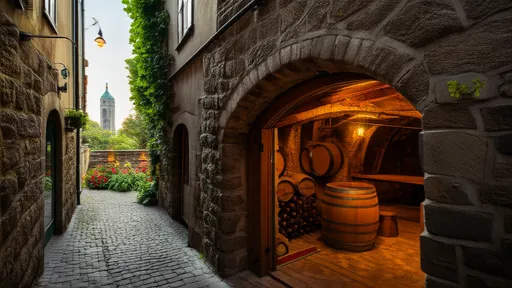
The Citadel itself has become a hub for culinary preservation. Within its ancient walls, the Gozo Wine Festival celebrates the island’s viticultural heritage each September, with tastings, live music, and traditional dishes served in candlelit courtyards. Local winemakers pour samples of Gellewża red and Ġellewża rosé, both native Maltese varieties grown in Gozo’s limestone-rich soil. Visitors are encouraged not just to drink but to understand—how climate, soil, and centuries of farming knowledge shape a wine’s character. In this way, even wine becomes a lesson in history.
Blue Lagoon & Beyond: Seafood Anchored in Place
A short boat ride from Gozo lies the Blue Lagoon, a stretch of crystalline turquoise water on the island of Comino. While often crowded with day-trippers, the true essence of Gozo’s coastal cuisine lies not in the lagoon itself but in the fishing villages that dot its shores. In Marsalforn and Xlendi, small harbors cradle colorful fishing boats that return each morning with the day’s catch. These are not industrial operations but family-run efforts, where nets are mended by hand and fish are sorted with care.
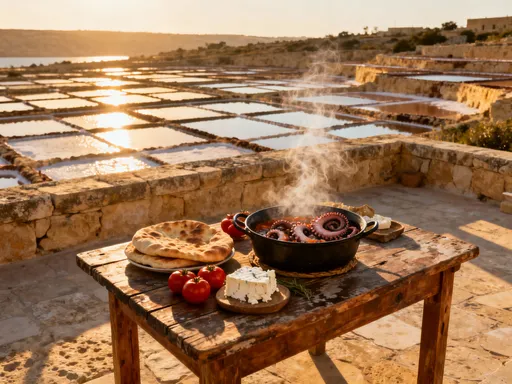
Seafood in Gozo is treated with reverence. Octopus, for example, is never rushed. It is simmered slowly for hours in a rich tomato and wine sauce, often with potatoes and olives, until the tentacles are tender enough to cut with a spoon. This dish, known as *supa tal-kwaren*, is a staple in home kitchens and local restaurants alike. Similarly, lampuki—Malta’s seasonal fish, similar to mackerel tuna—is caught using traditional ‘lampara’ traps, a method passed down for generations. Once caught, it is baked into savory pies with onions, tomatoes, and capers, or grilled simply with lemon and herbs.
Harborside eateries, often little more than open-air shacks with plastic tables, offer the freshest possible meals. In Marsalforn, some restaurants allow diners to select their fish directly from the morning’s haul, then watch as it is scaled, gutted, and grilled over charcoal. There is no menu artistry—just honest, flavorful cooking that lets the ingredients speak for themselves. Sustainability is not a buzzword here; it is a necessity. Fishermen respect closed seasons, avoid overfishing, and take pride in delivering only the highest quality. For visitors, dining by the sea is not just a meal—it is a connection to the rhythm of the tides and the labor of those who depend on them.
Farm to Fork in Xewkija and Nadur: The Taste of Terroir
Inland villages like Xewkija and Nadur reveal another dimension of Gozo’s food culture: its deep agricultural roots. Unlike mass-touristed islands that import most of their food, Gozo maintains a remarkable degree of self-sufficiency. The fertile soil, enriched by centuries of composting and crop rotation, yields high-quality potatoes, capers, artichokes, and wine grapes. These are not mere crops—they are points of pride, celebrated in local markets and protected under EU geographical indication schemes.
Agritourism has grown steadily in recent years, offering visitors a chance to experience farm life firsthand. At family-run goat farms, guests can watch cheese being made from fresh milk, then sample young and aged *ġbejniet*—small, round cheeses that range from soft and creamy to hard and peppery, depending on how they are cured. Some are even stuffed with capers or crushed pepper, adding a bold island kick. Olive groves, many of which have been cultivated for generations, offer guided tastings of cold-pressed oil—golden, peppery, and rich with the scent of Mediterranean herbs.
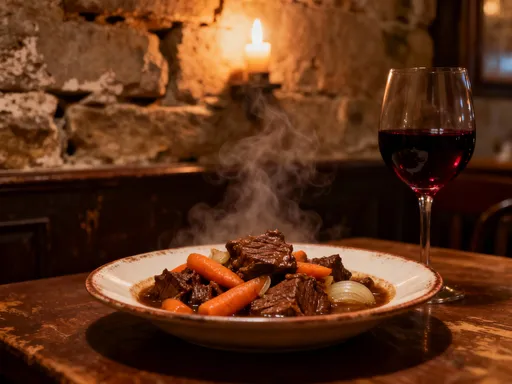
Perhaps the most intimate experience is the home-cooked Sunday lunch offered by local families. These are not commercial tours but personal invitations, often arranged through word of mouth or small cultural cooperatives. Guests are welcomed into homes where tables are laden with dishes like *fenek* (rabbit stew), stuffed vegetables, and ftira soaked in olive oil and tomatoes. Children serve drinks, elders share stories, and everyone eats slowly, savoring both the food and the company. In these moments, the boundary between traveler and local dissolves. One is not just eating Gozitan food—one is living it.
The Salt Pans of Xwejni: Where Land Meets Sea, One Crystal at a Time
On Gozo’s northern coast, the salt pans of Xwejni carve a delicate pattern into the rugged shoreline. These shallow, rectangular pools have been hand-carved into the limestone for centuries, their origins lost to time. Each year, as the summer sun intensifies, local salt harvesters begin their seasonal work. Seawater is channeled into the uppermost pools, where evaporation gradually concentrates the brine. Over weeks, the water flows down through a series of terraced basins, each one bringing it closer to crystallization.
The result is a flaky, mineral-rich sea salt that is highly prized in Gozitan kitchens. Unlike industrial salt, Xwejni salt retains trace elements from the Mediterranean, giving it a subtle complexity. It is used sparingly—sprinkled over grilled fish, pressed into fresh goat cheese, or finishing a ripe tomato with a drizzle of oil and a pinch of salt. The crunch is distinctive, the flavor clean and bright. Many locals believe that food simply tastes better when seasoned with Xwejni salt, as if the island itself is enhancing the meal.
At sunset, the salt pans transform into a golden mosaic, reflecting the sky in shimmering pools. Few tourists linger here, and fewer still understand the labor behind the crystals. Yet this quiet craft is a perfect metaphor for Gozo’s approach to food and tourism: slow, deliberate, and deeply connected to place. The salt harvesters do not seek fame or profit; they preserve a tradition that binds them to the land and sea. To taste this salt is to taste the island’s soul—one delicate flake at a time.
Why Gozo’s Future Tastes Like Its Past
As global tourism trends push many destinations toward homogenization—chain restaurants, generic souvenirs, and crowded photo ops—Gozo stands apart. The island has consciously chosen a different path, one that values authenticity over speed, tradition over trends. This is evident in the EU protections granted to Gozitan cheese, wine, and salt, which ensure that only products made according to traditional methods can carry the island’s name. It is also visible in the way families continue to cook the same recipes, farmers grow the same crops, and festivals revolve around harvests and feasts.
For the thoughtful traveler, Gozo offers more than relaxation—it offers enrichment. To truly experience the island is to move beyond sightseeing and into savoring. It is to understand that a temple is not just a monument but a gathering place where food once united communities. It is to recognize that a cheese is not just a snack but a story of land, animals, and human care. Every flavor carries context, every meal a layer of meaning.
The call, then, is not to visit Gozo as a spectator, but to come as a guest. To accept an invitation to a family table, to learn how to knead dough from a village baker, to walk the salt pans at dawn and taste the sea on your lips. In doing so, one does not simply consume the island’s offerings—one becomes part of its ongoing story. Gozo does not shout its wonders; it whispers them, in the crunch of salt, the warmth of bread, and the quiet pride of those who keep its traditions alive. Come not just to see, but to taste. Because here, history is not written only in stone—it is served on a plate.