Whispers of an Ancient Soul: Damascus Unfiltered
Stepping into Damascus feels like opening a book written over millennia—each alley a sentence, each scent a metaphor. This isn’t just a city of ruins; it’s a living tapestry of resilience, faith, and quiet beauty. Amid weathered stone and golden light, history doesn’t shout—it murmurs. I walked where prophets and traders once did, touched walls older than memory, and found serenity in the unlikeliest of places. Damascus is not a destination for the hurried or the indifferent. It reveals itself slowly, to those who pause long enough to listen. To visit is not merely to see, but to feel—a city that has endured empires, invasions, and time itself, yet continues to pulse with grace, dignity, and an unshakable sense of identity.
First Light Over the Old City
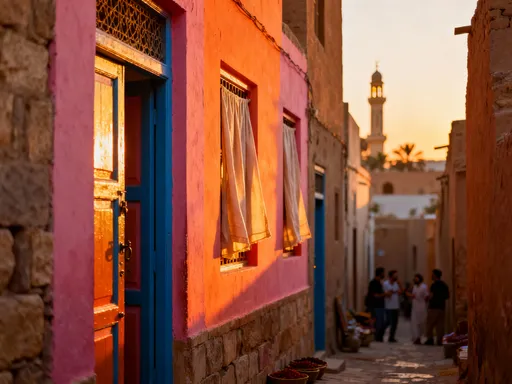
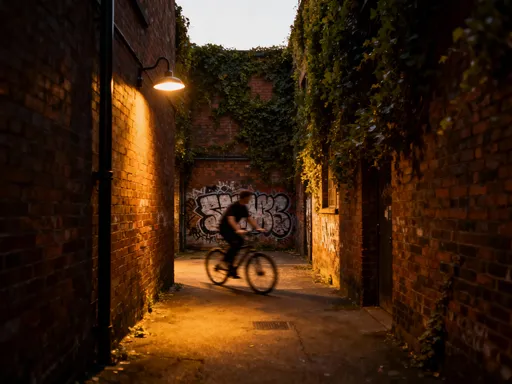
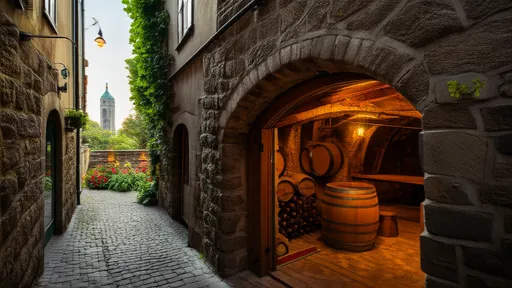
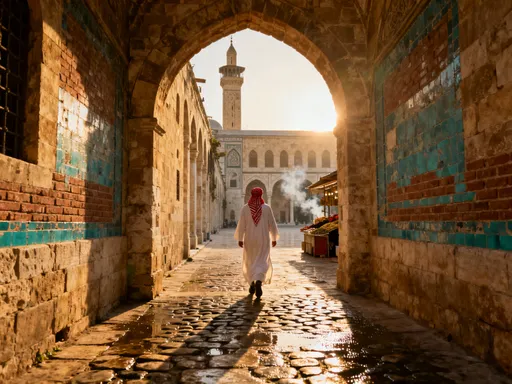
The day in Damascus begins not with a jolt, but with a gentle unfolding. As the sun climbs above the eastern hills, its first light spills over the ancient limestone walls of the Old City, casting long, soft shadows across narrow cobblestone alleys. These passageways, worn smooth by centuries of footsteps, seem to exhale the coolness of the night as the warmth of morning takes hold. The air carries a delicate blend of scents—freshly baked bread from hidden ovens, the sharp tang of citrus from market crates, and the rich, earthy aroma of cardamom-laced coffee brewing in small copper pots. This is the city waking up, not with noise, but with rhythm, a quiet cadence known only to those who live within its embrace.
At this hour, the Umayyad Mosque stands in near solitude. One of the oldest and most significant mosques in the Islamic world, its grand courtyard is a sanctuary of stillness. The morning light filters through the arched porticoes, illuminating the intricate mosaics that line the walls—depictions of gardens and flowing rivers, crafted in the 8th century to evoke paradise. The minarets rise like silent sentinels, their presence both protective and poetic. Few visitors are here yet; instead, it is the local faithful who come to pray, their voices low, their movements reverent. To witness this moment is to understand that Damascus is not a museum piece, but a city where faith and daily life are woven together in seamless continuity.
Beginning the day here sets a tone of humility and presence. It invites the traveler to shed the expectations of modern tourism—of checklists and photo ops—and instead to walk with awareness. The Old City is best experienced not by map, but by memory, allowing its alleys to guide you. Each turn reveals another layer: a hidden courtyard, a centuries-old fountain, a wooden door carved with geometric precision. The stone underfoot, worn into gentle curves by time, speaks of generations who have walked this same path. To start at dawn is to see Damascus not as it appears in brochures, but as it truly lives—an ancient soul, quietly breathing.
The Pulse of Suq al-Hamidiyah
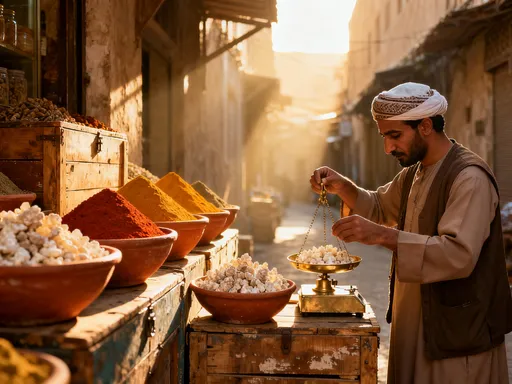
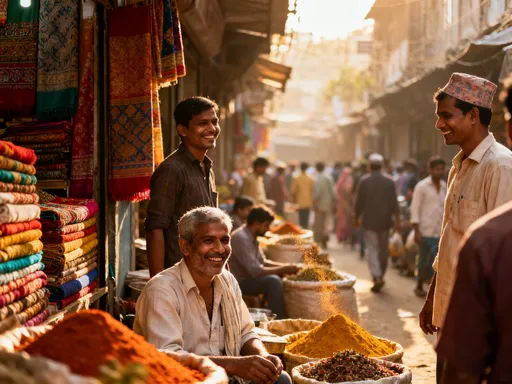
If the Umayyad Mosque is the city’s spiritual heart, then Suq al-Hamidiyah is its vibrant artery. Stretching over half a kilometer beneath a soaring iron archway, this covered market is one of the largest and most storied in the Middle East. Stepping beneath its vaulted roof is like entering another world—one of color, sound, and ceaseless motion. The air hums with energy, thick with the scent of saffron, dried limes, and the sweet smoke of burning oud. Mounds of spices rise like miniature dunes in shades of crimson, gold, and deep brown. Vendors call out in rhythmic cadence, their voices blending with the clinking of brass lanterns suspended overhead and the rustle of shoppers examining handwoven textiles.
This is not a market staged for tourists. While visitors are welcome, Suq al-Hamidiyah remains, first and foremost, a place of daily life. Housewives barter for fresh pistachios and sumac. Craftsmen repair leather goods at wooden benches passed down through generations. Elderly men sip tea in tucked-away corners, observing the flow of commerce with quiet satisfaction. The market’s origins trace back to Roman times, though its current form largely reflects 19th-century Ottoman design. It has survived fires, wars, and shifting empires, yet its essence remains unchanged: a place where goods, stories, and trust are exchanged in equal measure.
Walking through the suq, one cannot help but feel the weight of history in every transaction. This was once a crucial node on trade routes linking China, India, and the Mediterranean. Silk, spices, and manuscripts passed through these very alleys. Today, while global supply chains dominate, the suq retains its role as a cultural crossroads. Artisans still practice traditional crafts—gold filigree, mother-of-pearl inlay, hand-stitched leather bags. To buy here is not merely to acquire an object, but to participate in a lineage of craftsmanship that values patience, precision, and pride. Visitors are encouraged to engage with care—asking questions, showing interest, respecting prices that reflect real labor. The suq rewards those who move slowly, who listen more than they speak.
Courtyards and Quiet Reflections
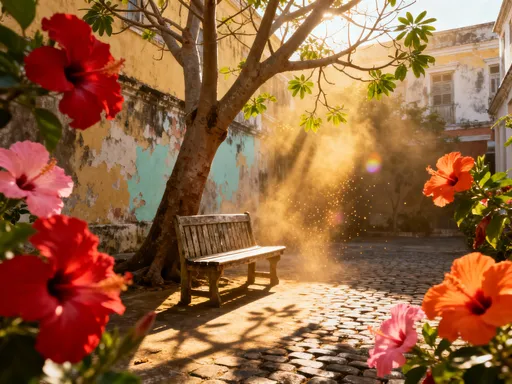
Amid the bustle of the Old City lie hidden sanctuaries—traditional Damascene houses, their grandeur concealed behind unassuming stone facades. These residences, built over centuries, are architectural masterpieces designed around inner courtyards, where life unfolds in harmony with nature and tradition. The courtyard, often centered around a fountain or a small tree, serves as the heart of the home—cool in summer, sheltered in winter, and always a place of gathering and reflection. Around it, rooms open through arched doorways, their walls adorned with *ajami* woodwork, a distinctive Damascene craft involving painted and gilded wooden panels with intricate floral and geometric patterns.
Two of the best-preserved examples open to visitors are Beit Nizam and Beit Ghazaleh. Though both have undergone careful restoration, they retain their original character—spaces where beauty is not displayed for show, but lived. In Beit Ghazaleh, dating back to the 17th century, one can still see the original reception halls where families hosted guests, the ceilings rising into delicate muqarnas vaults. The interplay of light and shadow, the sound of water trickling from a central fountain, the scent of jasmine drifting from potted plants—all contribute to an atmosphere of serene balance. These homes were built not for grandeur, but for dignity, privacy, and connection to the rhythms of domestic life.
What makes these courtyards so powerful is their contrast to the outside world. Just beyond the heavy wooden door, the city roars with activity. Inside, time slows. The design reflects a cultural philosophy that values inwardness, family, and contemplation. Even today, many Damascenes speak of the courtyard as a place of emotional grounding—a space where disputes are resolved, celebrations held, and quiet moments cherished. For the traveler, visiting one of these homes is not just an architectural tour, but an invitation to understand a way of life that prioritizes harmony over haste, beauty over spectacle, and stillness over noise.
The Barada River’s Hidden Pathways
Long before Damascus became a city of stone and story, it was a city of water. The Barada River, fed by snowmelt from the Anti-Lebanon Mountains, has nourished this land for over 10,000 years, transforming the desert into an oasis. Though much of the river now flows beneath the modern city or is diverted for agriculture, its presence is still felt in quiet corners where greenery thrives and life gathers. Along its lesser-known pathways—particularly in neighborhoods like al-Rukn al-Sharqi or near the historic Jisr al-Abyad bridge—locals stroll in the late afternoon, children play, and elders sit on stone benches beneath shade trees. These are not manicured parks, but organic extensions of the city’s rhythm, where nature and community coexist.
Walking beside the Barada is to witness Damascus in repose. Jasmine vines climb ancient retaining walls, their fragrance filling the air at dusk. Patches of wild mint grow beside the water, and the sound of flowing current mingles with the murmur of conversation. In these spaces, the city feels not just ancient, but alive—a place shaped by natural forces as much as by human hands. The river’s role in Damascus’s survival cannot be overstated. It enabled the development of qanat systems—underground channels that distributed water throughout the city—and supported orchards and gardens that once surrounded the urban core. Even today, the concept of the *bustan*, a walled garden sustained by river-fed irrigation, remains central to Damascene identity.
For the thoughtful traveler, these riverfront areas offer a chance to experience Damascus beyond monuments and markets. They are places of unscripted life, where families picnic on weekends, couples walk hand in hand, and fishermen cast lines into the slow-moving current. There is no admission fee, no guidebook entry—just the simple pleasure of being present. To visit here is to understand that Damascus is not only a city of history, but of continuity. The Barada still gives life, and in its quiet flow, one hears the steady pulse of a civilization that has learned to endure.
Mount Qasioun: A View from Above
Rising to the northeast of the city, Mount Qasioun offers a vantage point unlike any other. Its slopes, once dotted with orchards and monasteries, now host residential areas and simple pathways that lead upward toward panoramic views. The climb is modest—accessible by foot or car—but the reward is profound. From the summit, Damascus unfolds below like a vast, textured mosaic. The Old City’s gray rooftops blend with newer neighborhoods, minarets piercing the skyline, the Umayyad Mosque standing as a luminous anchor. At sunset, the city glows in golden light, the air turning soft and still, as if holding its breath.
The mountain has long held spiritual significance. Islamic tradition holds that Noah’s Ark came to rest here after the flood, and a small shrine near the summit marks the site where he is said to have prayed. Pilgrims and locals alike visit to reflect, to pray, or simply to sit in silence. The atmosphere is one of reverence, not spectacle. Along the trails, simple tea stalls serve mint tea in small glasses, and families gather on weekends to enjoy the cool breeze and expansive views. There are no commercial attractions, no cable cars—just the quiet dignity of a place that has watched over Damascus for centuries.
Mount Qasioun is more than a scenic overlook; it is a place of perspective. From above, the city’s complexities—the layers of history, the resilience of its people, the interplay of old and new—become visible in a single glance. It reminds the visitor that Damascus is not defined by any single era, but by its ability to persist. The mountain, like the city, has seen empires rise and fall, yet it remains. To stand here is to feel both small and connected—to time, to place, to something greater than oneself. It is a moment of clarity, a silent conversation between earth and sky.
Flavors That Tell Stories
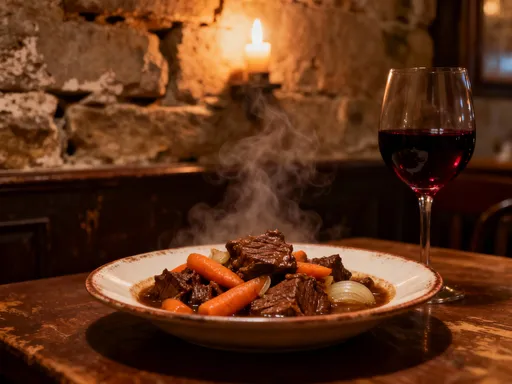
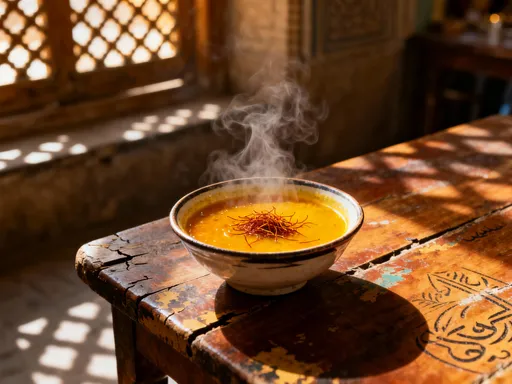
To taste Damascus is to taste memory. The city’s cuisine is not flashy or trend-driven; it is deeply rooted in seasonality, hospitality, and ancestral practice. Meals unfold slowly, often beginning with a spread of mezze—small plates of hummus, mutabbal, and tabbouleh—followed by rich, slow-cooked dishes that carry the weight of generations. One such dish is *kibbeh labaniyeh*, a comforting stew of spiced ground meat and bulgur dumplings simmered in a tangy yogurt sauce, often served with toasted pine nuts. Another, *fatta*, combines layers of rice, crispy bread, and lamb in a garlic-rosewater broth, its origins tied to celebratory meals and family gatherings.
Then there is *sfiha*, the Damascene version of meat-topped flatbread, baked in wood-fired ovens until the edges are crisp and the center juicy with minced lamb, onions, and sumac. These dishes are not mere recipes; they are narratives, passed down through kitchens where grandmothers teach daughters the exact moment to stir, the right pinch of cinnamon, the patience required for true depth of flavor. They speak of a culture that values care, continuity, and the act of feeding others as an expression of love.
For travelers, the best way to experience this cuisine is not in polished restaurants, but in unassuming local eateries—family-run spots tucked into side streets, where the menu is short and the ingredients fresh. Here, food is made without performance, without pretense. A simple plate of *kibbeh nayyeh*, finely pounded raw meat with herbs and olive oil, served with flatbread, can be a revelation when prepared with trust and tradition. Desserts, too, tell stories: rosewater-scented *ma’amoul* cookies filled with dates or nuts, often made during religious holidays; or *muhallabiyeh*, a creamy milk pudding dusted with cinnamon, served in humble clay bowls. To eat in Damascus is to be welcomed—not as a customer, but as a guest.
Traveling with Respect and Awareness
Visiting Damascus requires more than a passport and a camera; it demands mindfulness. This is a city that has endured profound hardship in recent decades, and while signs of resilience are everywhere, sensitivity to context is essential. Travelers should approach not as spectators, but as respectful guests. Dressing modestly—shoulders and knees covered for both men and women—is not only culturally appropriate but a sign of respect in religious and traditional spaces. When photographing people, especially women or elders, it is courteous to ask first. A smile and a simple gesture often suffice to build connection.
Timing matters. Mornings are ideal for visiting major sites like the Umayyad Mosque or Suq al-Hamidiyah, when crowds are lighter and the light is soft. Fridays, the main day of prayer, bring a different rhythm—markets may close early, and the city slows in observance. Engaging with locals should be done with genuine interest, not curiosity. A shared cup of tea, a conversation about family or weather, can open doors far more than any transaction. Many Damascenes speak warmly of visitors who take time to learn a few words of Arabic, even simple greetings like *salaam alaikum* or *shukran*.
It is also important to stay informed. While parts of Damascus are accessible to international travelers, conditions can change. Checking current travel advisories from one’s home government is a responsible step. Yet beyond logistics, the deeper responsibility lies in intention. Tourism, when done thoughtfully, can be an act of solidarity—a way of acknowledging a city’s enduring spirit, of supporting local artisans, chefs, and guides who keep traditions alive. To travel here is not to ignore challenges, but to witness resilience firsthand, and to leave with gratitude, not just photographs.
Ultimately, Damascus does not offer easy answers or polished experiences. It offers something rarer: authenticity. To walk its alleys is to walk through time, to feel the presence of countless lives that have shaped this place. It is a city that asks not for admiration, but for attention. And in return, it offers a quiet truth—that beauty, dignity, and connection can endure, even in the face of great trials.